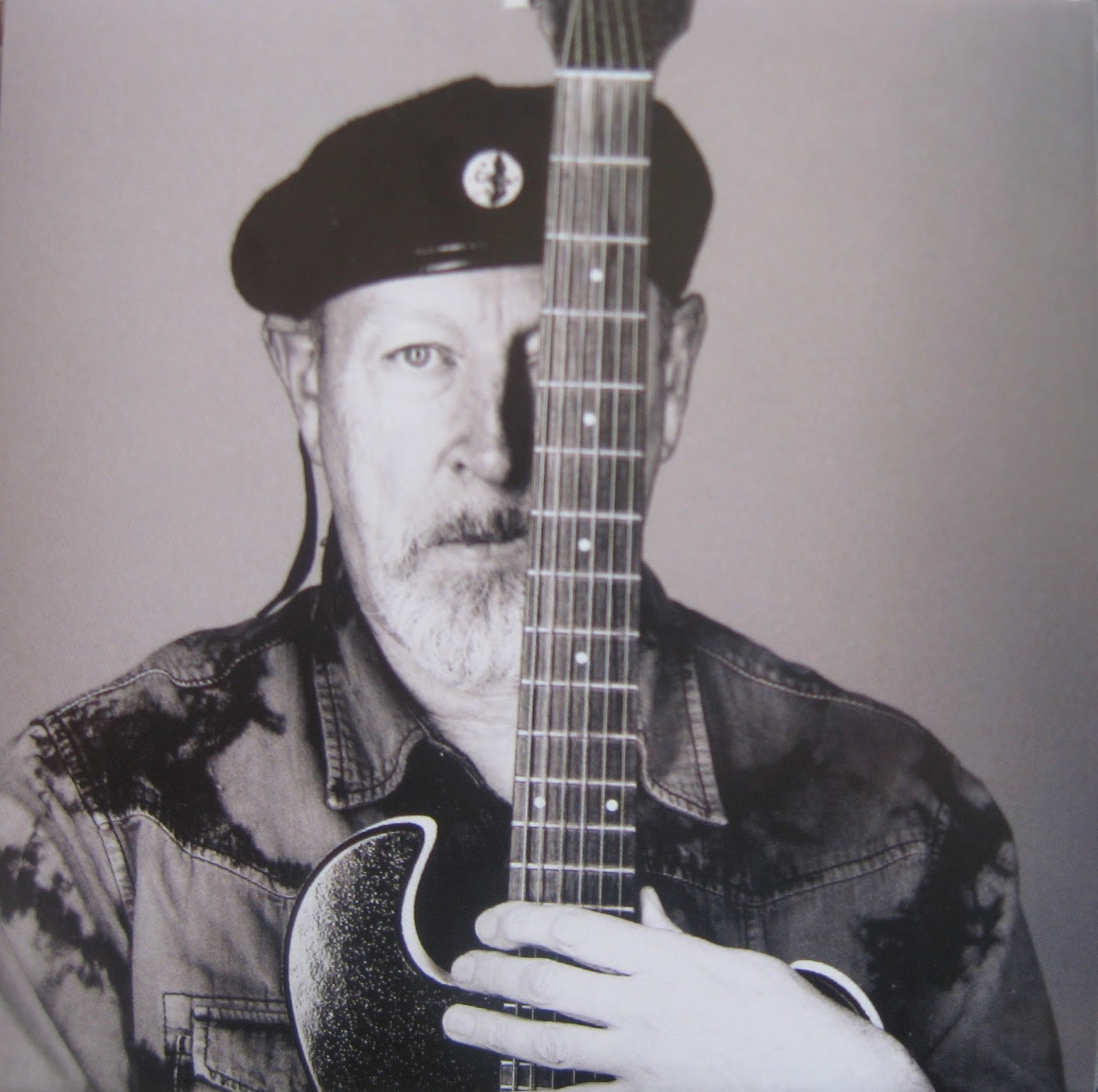
Tuesday, December 8, 2009

JR and Flanagan... A Real Pleasure


Tenorman JR Monterose always gave credit to pianists, starting with early Bud Powell, for the advanced harmonic sense he acquired... gradually. Monterose (he was a "Junior," hence the "JR" initials nickname) worked with several major ones over the course of his in-and-out, here-and-gone career, from George Wallington and Horace Silver to Mal Waldron and Hank Jones. But the man who helped JR shine on records most was "poet of the piano" Tommy Flanagan, who backed him on two brilliant albums separated by almost a quarter of a century--the long time between most likely the result of Monterose's peripatetic wanderlust and somewhat reclusive nature.

It's a small irony that both men were born in Detroit (Monterose in 1927, Flanagan in 1930). Yet because JR's family soon moved on to Utica, NY, and his jazz training then came in the ranks of some Northeastern big bands, the two young musicians had only minimal contact until the late Fifties when JR's second date as a leader (released on Jaro Records in 1959 as The Message) brought him together with Tommy at last. Flanagan had already made his bones maneuvering through both Sonny Rollins' Saxophone Colossus and John Coltrane's Giant Steps, as well as many sessions backing J.J. Johnson and Thad Jones, while Monterose had played for a time with Charles Mingus and then Kenny Dorham, and had gained some critical acclaim for his debut album on Blue Note. But for some reason Tommy and JR were a great fit straight from the git-go, the result maybe of Flanagan's amazing "ears" and sure sideman skills. Or maybe their chord choices and favored tempos were a closer match since JR early on was admittedly in thrall to both Rollins and Coltrane.

Whatever the source, the two were attuned. And with the quartet completed by quick-fingered Jimmy Garrison and thunderous Pete La Roca, you can bet JR had to be ridin' some roilin' rhythm. You can hear it immediately on opening track "Straight Ahead," a stomp-it-off rewrite of "Get Happy" (with some lightning exchanges between JR and Pete)--and differently on the following cut, one of only two ballads in the set. But "Violets for Your Furs" let Monterose demonstrate his ability to play at any speed, creating a lovely tenor-sax equivalent to Frank Sinatra's famous vocal.

JR had come back to the Apple after a year-and-some's residence at a club in upstate Albany, and along with added confidence he brought some polished and inventive originals too. But the complex structures and busy changes of "You Know That" and "Short Bridge," for example, couldn't faze Flanagan after Coltrane's Step-lively tunes--and his flowing solos show it--while the upbeat blues of "Green Street Scene" was just sweet cream to a sharp-eared cat from Detroit.

With the section taking care of business, JR was free to be assertive or mellow, spontaneous or studied--to vamp some sections of his waltz called "Chafic" (an Arabic word for "merciful," however he came by it 50 years ago), or mourn most lyrically throughout Benny Golson's already-classic "I Remember Clifford": breathy, hovering, then blowing free, and cushioned all the way by Tommy. So he rolled on directly across that final "Short Bridge" too...

... And then JR was gone again, to Maryland, Iowa, Europe, always looking for the gig and the solo that would satisfy. The two guys crossed paths in Los Angeles and overseas, but without any follow-up recordings. Tommy maintained a busy schedule for all the years, while JR played only where or when he felt inspired. A few albums surfaced, usually live club snapshots, but nothing of great substance really... until 1981. Back in New York State for a while, he sat in on Flanagan's solo gig up in Schenectady, and the dual magic was suddenly and soundly apparent.

Tommy had become accompanist extraordinaire, supportive at every moment, singing with every note, pushing when needed, laying back quietly, shining forth during his own pretty, pithy solos, making things happen. All the years with Ella and others had sharpened and secured that part of his genius--while Monterose was playing with superb thrust and parry, solos plaintive yet controlled and wasting no notes, still blasting when appropriate but now whispering more frequently and easily, even breaking out a not-previously-heard soprano sax for a few numbers when they hit the studio for what became the album titled A Little Pleasure (available currently as remastered by Rudy Van Gelder for little-known Reservoir RSR CD 109).

Man oh man, what songlines, what languid beauty they found there, too! Think of the other late-century sax-and-piano duos--Stan Getz and Kenny Barron, Art Pepper and George Cables, Zoot Sims and Jimmy Rowles (a could-have-been, anyway)--and put JR and Tommy right up there. Tune after tune, sweet and sensitive, tart and transcendent, holding to the rhythm yet free to shift gears and tempos as inspired, but always advancing inexorably--yes, discovering and delineating anew the spontaneous "freedom Jazz dance" as it's meant to be experienced.

If you think I exaggerate, just sample a track or two: perfect versions of standards like "Never Let Me Go" (Tommy's notes dancing around the ascerbic, crying tenor) and "A Nightingale Sang in Berkeley Square" (sighing soprano nestled in beauty, even when fallen silent, from first note till last); elegant rewinds of Dizzy's "Con Alma" (JR swirling busily, Flanagan in a staccato strut) and Coltrane's "Central Park West" (Tommy stepping lightly, JR enjoying the city sights); splendid Monterose originals "Vinnie's Pad" (up tenor, surging, to the totally sudden stop) and "Pain and Suffering... and a Little Pleasure" (unexpectedly lovely soprano lilt, waltzing with the keys). Except for a track or two, the nine were nailed in single takes; for those two days in April the guys played as though newly resurrected and on fire--two phoenixes brightly risen. And Flanagan's career continued at that elevated level all the way into this 21st century. But JR slipped back into the shadows, playing brilliantly no doubt, but largely unheard, his death in 1993 going mostly unnoticed.

But you can still find Monterose fans today, aligned together from Albany to Alabama, from the Alhambra on to Albania maybe... alive and well and always alert for some newfound unknown dispatch from the vanished frontlines of JR's unceasing, far-flung, ultimately frustrated search.

Wednesday, December 2, 2009

Re Printing the Wyeth Family (II)


Next week's piece will look at jazz greats JR Monterose and Tommy Flanagan, but first I decided to revisit the Wyeth family (see most recent post below). Last time, I tried to position each illustration where it would be clear as to subject or artist, but chose to say nothing explanatory. So I thought it would be useful here to look briefly at one or two specific works by each artist, taking them in no particular order.

N.C., or "Pa" as he was known to all, illustrated hundreds of books and magazine pieces, plus calendars, posters, and ads. He was a professional working illustrator, in other words, and as such most of his paintings were, let's say, site specific--powerful or lovely, a frozen moment or a dramatic highlight. The Passing of Robin Hood is an example combining all those elements. Based on one folk tale about the mythic outlaw, we see the dying archer in his last moments, propped up by two of his men, about to shoot his final arrow, meant (as I recall it) to locate the place he would be buried. The pale room with window showing hill and sky outside (the life and freedom he'll enjoy no more), the anguished poses, pale-as-death Robin in silhouette, the sense of his fumbling frustration versus engrained bow skills, all are present. You could say that N.C.'s painting hits its target.

But the story continues decades later when son Andrew chose to paint a scene partly in homage to his father, silently echoing both the death painting and N.C.'s lovely fine-arts masterpiece The Springhouse (see it reproduced in the first post). Even if a totally different building--this one on the Kuerners' farm in Chadds Ford--Andy's Spring Fed can be interpreted as a reverse, inside-looking-out view from within Pa's famous structure. The water is full to overflowing (possibly the life draining from N.C.?) and a viewer can almost hear it drip; the cows outside are restless; the detail and subdued colors of the egg tempura surface seem slightly unsettling; and that helmet-like bucket and wire dangling down at right are, according to Andy in an interview I read somewhere long ago, his subconscious references to the pose and arrow of N.C.'s Robin Hood scene. Whether a viewer sees any of that or not, the painting serves as a potent example of the memories and behind-the-scene details at work every time Andrew picks up a brush. (Another example shows up later in this piece.)

Eldest child Henriette made her reputation fashioning portraits (her father, her husband Peter Hurd, various Wyeth and Hurd relations, Helen Hayes, Pat Nixon, some wealthy patrons), but she chose to focus for pleasure on flowers and other studio-interior still lifes. Some early works were fantasies bathed in what she called "the artifice of blue light," but New Mexico's desert light and the ranching life made her more of a realist, content to paint smaller subjects and run the household and husband and three children and generally be, as she said, "the power behind the throne." Still, the Santa Fe Opera, for one, used lush paintings of hers, like Puff Ball and Still Life with Irises, for their annual opera-season posters for many years.

Hurd himself was one of N.C.'s earliest live-in students, and he quickly endeared himself to the family and then in 1929 won the beautiful, outspoken daughter--even persuading her eventually to move to the San Patricio area near Ruidoso. Peter painted desert, cowboy, and ranch scenes mostly, with the odd portrait now and again (including one of Lyndon Johnson which the President rejected). Full of sunlight and dust and action moments, Hurd's landscapes and hills are distant and enveloping simultaneously; they seem a bit Western rough, sort of improvised I suppose, yet are actually polished works done in egg tempera, like A Shower in a Dry Year and The Gate and Beyond shown here.

It was Hurd, in fact, who introduced the tempera medium to the Wyeths, but Andrew soon became the acknowledged master of that delicate, demanding method for creating a picture--using egg yolks at first, laying a ground, building up a surface, adding ground-in colors, scratching-in some strokes and painting others. Andy would eventually employ knife or brush or pencil or... well, any device that came to hand at the right moment. Though few artists have the hand skills to fashion such gorgeous detail in tempera (as here in the amazing Pentecost), for Andrew it was merely learned technique, however brilliant. What made his works distinct from others was his total involvement in the scene before him, on the one hand, and his immersion at the same time in memory, and history, and death, and occasionally the romance not of love but of something like medieval geste. An observer could say he turned exteriors into disguised mental interiors--a mis-identified "realist" painter with no real allegiance to the factual details of an object or scene.

One haunting example is the portrait simply titled Adam, the last of several studies made of laborer Adam Johnson. The painter brought distant crows and tumbledown shed and silver bucket and blue-jacketed black man together because that's how his eye wanted to see them. Andrew proudly said later that "Adam told a reporter one of the finest things I have ever heard said about me: 'Andy--he's got the glory of painting and I got the glory of cuttin' grass, and we ain't gonna get nothing else.'"

Scenes as commonplace and localized as grasscutting were the main inspiration for daughter Carolyn. Early on she engaged the world, albeit hesitantly, but a failed relationship returned her to the Wyeth's Chadds Ford home, and she became the cranky, reclusive spinster aunt (although she stayed close to Andy and then his son Jamie too). She painted barns and chicken houses, big buckets and small Mason jars hidden under benches; and her single most reprinted work seems to be the unsettling brown-tones image titled Up from the Woods, with a very sexual split treetrunk in the dark foreground and the Wyeth house as a small bright bit of background--the finished work slightly primitive, strangely powerful, serenely Freudian.

Another outsider welcomed into the family was John McCoy, who married daughter Ann and studied for a short time with N.C. He learned to work in watercolor and some tempera, like the various Wyeths, but was dissatisfied. He then broke ranks and found his own mixed media style, and though he commuted back and forth between Maine and Chadds Ford like his in-laws, he eventually focussed most completely on Maine seacoast scenes; misty and moody, subdued trees with dabs of wildflower color, or swirling clouds and gulls, and full-action, splashing waves. But I offer his two very different works Wawenock Hotel and Milkweed Seed. (For splashing action, see The Ledge, placed at the head of this piece).

Finally we come to the other Maine-stay Wyeth: James Browning, son of Andrew and Betsy, still typically known as Jamie. Trained by Carolyn and his father, Jamie's commissioned portraiture work started when he still a teenager, and he produced famous ones of Warhol and Nureyev, JFK and other Kennedys. But over the years he has come to focus more--in a looser and slightly comical style--on pigs and pumpkins (including At Sea, just above), chickens and dogs and lighthouses, slightly strange locals and even stranger tourists. Jamie lives on Monhegan Island, and an amusing photo shows him holed up in a plywood crate with one wall missing, where he can sit and sketch and not have strangers peering over his shoulder. (Islanders help him move the mini-studio from place to place each day.)

The painter's self-portrait reiterates his pumpkin fascination. Less bleak, more forgiving, more fun, Jamie has proved to be the designated inheritor and worthy replacement for his father and the other Wyeth family painters, all of them dead now; and one can only hope that grandpa N.C. is looking down from on high, and laughing--just as robust as he ever was.

Sunday, November 29, 2009

Way of the Wyeths (I)


Like thousands of other kids of the 1940's and '50's, I grew up reading the wonderful black-cloth-and-color-plate editions known as Scribner Illustrated Classics--Treasure Island, Robin Hood, The Last of the Mohicans, Kidnapped, Robinson Crusoe, The Black Arrow, and many other familiar titles. Most of the Scribner books were blessed with glorious color illustrations by New Englander N.C. Wyeth. I didn't pay much attention to his name back then--I was just responding to the obvious drama and power of the pictures--but as I got older and became a book collector and then fan of illustration work and visual design, I learned more about Wyeth and his amazing family.

Newell Convers Wyeth was a big man, full of even bigger enthusiasms, for painting and teaching, for Nature and Thoreau, for steady domesticity and a rollicking but directed family life. N.C. and his gentle wife Carolyn settled in Chadds Ford, in the Brandywine River Valley not far from Wilmington, Delaware (where he had studied the art of illustration with late 19th century master Howard Pyle). The Wyeths had five children, and three of them--Henriette, Carolyn and, of course, Andrew--became famous painters themselves, partly as a result of the concentrated tutoring, arts home-schooling, and costumed play-acting they experienced almost daily as children. (Third daughter Ann, a classical music composer, married painter John W. McCoy, and older son Nathaniel became a design engineer with many patents including one for the first plastic bottle intended for water and the like.)

Carrying the story further, all the way into this century in fact, Henriette in 1930 married Western painter Peter Hurd--a student of N.C.'s and older good friend of Andrew--and their youngest son Michael gradually has become a well-known Southwest artist as well as director of the family's Hurd/Wyeth gallery. Similarly, Andy married Betsy James, and their son Jamie's slightly edgy portraits and gently comical paintings of animals and denizen tourists have made him a well-scrutinized success since his late teens. (In 1991, a Wyeth biographer noted that 12 of the 13 surviving grandchildren of N.C. either painted or worked in the arts more generally, but I am choosing to stop with the earlier generation.)

There was a time when Andrew's watercolors and egg tempera paintings--each one a study in painstakingly detailed, beautifully crafted realism, usually with some odd secret backstory, or suggestion of bleak rural menace and barely suppressed violence, but occasionally a sly, unexpected moment of comedy too--made him the most famous illustrative painter in America, positioned a step further along the fine arts spectrum than, say, Norman Rockwell. In the last decade or two, however, while his paintings have ascended into the million-dollar price range, his reputation among critics has declined (again), too much Andy Wyeth publicity irritating their fine minds, I guess. (Fans of figurative art like me wonder why abstracts and weird collages and three-dimensional constructs, all heavily dosed with post-modern irony these days, are routinely valued more highly than illustration skills. I've always subscribed to the notion that one should first learn to draw before abandoning the whole history of art.)

Of the other children, Henriette made a specialty of canny portraits and lush floral still lifes, while Carolyn is still something of a mystery, a fragile, skittish figure who slowly paints haunted, haunting scenes of... whatever she chooses. Ann's quiet husband John McCoy studied with N.C. for a year, then went his own way, focused mostly on the rugged Maine seacoast. And Peter Hurd, following his time with N.C., returned to the Ruidoso area of New Mexico, and eventually persuaded Henriette to make the move too--the only Wyeth to break free of her Eastern roots. The rest of the family continued their annual migration (in terms of place and subject matter both) back and forth between Cushing, Maine and Chadds Ford.

N.C. died relatively young (in 1945), he and a grandson, when a train collided with his car, but he had lived long enough by then to see all five of his artist children or best students beginning to acquire their own individual reputations. (Andy in particular was well on his way to the astonishing fame and financial security--all carefully managed by Betsy--that lasted for 60-some years until his death less than a year ago.) But N.C. had for several decades been torn between the illustration work that maintained the well-to-do life for all, and his poorly stifled impulse to prove himself in the fine arts. He actually painted scores of landscapes and rural or sea scenes over 40 years time. But the world mostly ignored them, and the era of book illustration was ending too. As N.C. slowly became known more as Andrew's father than as the great Golden Age illustrator, some of his comments seemed slightly envious of Andy's painterly skills and burgeoning reputation. (The great indispensable source for such family stories and lore is The Wyeths: The Intimate Correspondence of N.C. Wyeth 1901-1945, 850 pages brilliantly edited by Betsy.)

The years my wife and I had a bookstore overlapped with the latest color-improved reissue of those N.C.-enriched Scribner books, and seeing the powerful color plates reawakened my interest in illustration. We began travelling to book shows and collecting Wyeth editions, gradually expanding to samples of N.C.'s children's work as well.

My wife's first mother-in-law, another Betsy--the first husband died young, as did Sandra's own mother, so Betsy became her replacement "Mom"--lived out on the Mainline west of Philadelphia. When visiting, we made a point of also traveling to the Brandywine Valley, to the Wyeth family sites and museum. We brought back a beautiful print of N.C.'s 1944 painting titled Springhouse, which became our fireplace mantle centerpiece for many years (our island home has springfed water too).

Then a year or two later, our son Michael took an Academy-prep year at the New Mexico Military Institute in Roswell. We visited him, of course, and then journeyed west to the Hurd-Wyeth ranch near San Patricio; we stayed at the ranch guesthouse for a night, marveled at the works on display in the gallery, and bought some minor items representing Henriette and Peter. But we also discovered that the nearby John Meigs Gallery was closing and selling off a whole library of books, plus Wyeth-related artworks... so we bought prints personally signed to "Johnny" (Meigs) by Jamie and by John McCoy and books signed by Peter, but the special find was a rare Forties print of a lovely, little-known Maine lobstering scene painted by N.C., in a gorgeous old hand-colored frame. (Re-selling the Meigs books we bought helped pay for those multiple-edition pieces!)

Over the next decade we dealt with the closing of our store, the death of parents, growing grandchildren... life. Collecting was less important. And among the Wyeths, Carolyn passed on in 1994, and Henriette in 1997; Peter Hurd and John McCoy had already died during the preceding decade. Only indomitable Andrew and genial Jamie and the other grand- children carried on.

In 2007 Sandra and I decided we needed to see New England and the fall foliage. Starting from Long Island, we drove up the seacoast as far as Boothbay, Maine. Then, looking for the local sights, we discovered that by accident, without planning, we had come to Wyeth country, sort of the Downeast portion, with the family's "Eight Bells" summer home, the Olson House (where Andrew painted Christina's World), the Wyeth-supported Farnsworth Museum, and other pertinent places all nearby. And so we visited and marveled once again, especially at the museum's show of "Andrew Wyeth at 90." Then, gulping, we convinced ourselves we could afford to buy two more signed prints--one, Andy's peaceful and lovely watercolor Around the Corner; the other, Jamie's strange and slightly eerie work, The Red House.

Since then we have refrained from further madness. Andrew kept painting and then finally died, at age 91, just this past January. The world took notice but didn't seem to mourn all that much. I hope the surviving Wyeths are well and carrying on not only the name, but the astonishing artistic legacy of N.C. and his students and children. It's a cliche but this time true: The world will not see their like again...

Wednesday, November 18, 2009

Progress On-Air Only


When the campaign "season" began for the 2008 election... (Wait, was that really almost two years earlier, 20-some months before the actual voting?) Well, sometime around then I started listening regularly to "Lefty" Progressive radio--"Air America" and other independent stations--and wound up a fan of Seattle's AM 1090. Now I try to catch a little each day from three of the best "Progressive Talk" folk: Stephanie Miller, Thom Hartmann, and Ed Schultz. But don't imagine them as the jolly, one-for-all "Three Musketeers." I don't know what competitive issues exist, but you aren't likely to hear any one of the three offer praise or promotional support to the other two (though a listener might stumble on an AM 1090 station ad doing just that).

Aided instead by a couple of voice-talent/standup-comic guys, Stephanie Miller, for example, dispenses wild talk and weird humor in the early a.m. "drive-time" slot. Her mile-a-minute program takes some getting used to, but that off-the-wall outrageousness does often make cooking breakfast and driving to work more enjoyable--with pearls of Progressive-politics truth suddenly bobbing up amidst the swine troughs and fart jokes. Though Ms. Miller is a distant cousin of my wife Sandra--both of them raised in upstate New York; yes, we admit to some Batavia-to-Buffalo bias--a more intriguing fact is that she is the daughter of Congressman Bill Miller, who was Barry Goldwater's running mate back in the 1964 Presidential contest. Clearly this particular "nut" fell farther from the family-tree branch!

Thom Hartmann, in contrast, comes across as cocksure; well-spoken and outspoken; a determinedly-Left intellectual who seems to know something useful about almost every development in politics, social justice, economics, history, science, and world affairs. His guests tend to be quite serious, usually with their own agendas or books to promote, but Thom uses his steel-trap memory and razor-sharp debating skills to argue them into submission, or at least a draw--and occasionally to boost a visitor he actually agrees with. One of his few regular guests is U.S. Senator Bernie Sanders, Independent from Vermont, and one of the last great statesmen at work inside the damned Beltway. (I'd certainly vote Sanders for President... shoot, I'd even happily campaign for him.) Anyway, I'd say one listens to Hartmann to be enlightened rather than simply entertained, as he rails--convincingly--against a do-nothing Congress, "banksters," corporate schmucks, warmongers, tax-cuts for the wealthy, union-busting Republicans, and present-day American-system stupidity in general. As Tom exhorts us at sign-off time, "Democracy begins with you! Get out there... tag, you're it."

Ed Schultz sits somewhere between Cousin Stephanie and, er, Uncle Thom, a suitable spot for an ex-jock, ex-Midwest Conservative. Redhead Ed, "Big Eddie," saw the Liberal light a decade ago when a new love entered his life (wife Wendy is now his producer) and educated him to the downside of American society; and he's been a tireless Progressive convert ever since--an inspirational, "man of the people" spokesman. Schultz shows a hefty profile and cuts a broad swathe as the Left-spectrum counterweight to the man he calls "The Drugster," meaning Rush Limbaugh, voice of the Right Wing crazies. (In a nice irony the two men actually look and even sound a bit alike!) Ed holds to his Midwest roots, operating in part out of Fargo, North Dakota, and he's still a gun-toting hunter and sportsman; but nowadays he broadcasts from New York City and D.C. too, with a one-hour cable television program on MSNBC weekdays in addition to his three-hour radio shift. Schultz's populist proselytizing is focussed on public option/single payer Health Care Reform, union-backed jobs creation, Republican obstructionism, and cheap money now for small businesses rather than Wall Street.

One thing that unites all three radio hosts, willingly or not, and shakes the core foundation beliefs of many Left-leaning citizens these days, is this: what the hell has happened to President Obama's campaign promises for big changes, a new day in Washington and America? It's been almost a year, and he seems less and less an activist and more and more just another charming figurehead hemmed in by corporate power, Congressional resistance, well-funded lobbyists, and the damned military industrial complex. The talkers explore this daily, and Big Ed also recently brought a "town hall" version of his program to Seattle, which my wife and I attended hoping for enlightenment. Like all such events, we were alternately inspired and disenheartened and came away still confused. Is once-decent, hard-working, yes, even capitalist, America just doomed?

No answers here. But before the event I was so revved up that I designed a "Buffalo Nickel" t-shirt, which my older son Glenn produced in an edition of ten. Then I wrote a supporting political statement to flesh out the simple slogan on the shirt. (The statement is reproduced below; our shirt appears up top.)

Meanwhile, may we all find answers and new hope... and if anyone reading this wants a t-shirt, I have several left--proudly Left--that I'm offering at cost!

THE REAL CHANGE CREDO

First the Great Depression, then Republican recessions... and now we're trapped in this Grim Regression, praying for a Progressive President to arise--an F.D.R. full of spirit, a leader burning with the fire of M.L.K. and the hardwood grit of L.B.J., active and involved rather than aloof and above the fray; a scrapper who'll kick ass rather than kiss it, who'll chop the neo-cons and con-man Re-Pubs and publicity-seeking blue-dogs off at the knees.

Over the past 30 years, Reaganomics and misbegotten, corporation-funded administrations have ruined manufacturing, devastated the unions, outsourced the nation, and decimated the middle class. And that's why we voted for real change, not nickel-and-diming!

It's time. No more pharmaceutical liars, and Goldman Sachs cheats, and "the best Congress money can buy." Down with banksters and Wall Streeters and free trade! Up with health care and fair wages and real jobs for real people!

Yes, we backed a brilliant orator who brought us this far, but now we need an arm-twister and do-er. We're liberals and Democrats and independents and Progressives, and we deserve--we DEMAND--a President who stands with us and for us!


LATE DEVELOPMENTS: Evidently I overstated the case regarding rivalry among the talk shows hosts. Ms. Miller has now moved to NYC, creating (as she is wont to say), her "BI... ((long pause)) Coastal show." The move also allows her to appear occasionally on the Ed Schultz TV program. Politics does make strange... er, bedfellows.

Friday, November 13, 2009

Mulligan Overmatched?


In his mixed salad days, collegiate-looking Gerry Mulligan was happy to arrange for small group, concert band, or big band alike, but he was even happier to blow--to haul out his hefty baritone and jam with whomever was on the stand at the moment. This willingness no doubt helped shape his innovative, counterpoint-rich playing (and polyphonic arrangements) and provided additional opportunities to meet and hang, which may in turn have paved the way for the famous series of casual dual meets issued by Verve and other labels, of Mulligan plus... Johnny Hodges... or Stan Getz... or, at other times, Chet Baker, Bob Brookmeyer, Art Farmer, Dave Brubeck, et al. The Verve LPs were built around reedsmen, but Mulligan worked closely with pianists, trumpeters, and trombonists too.

I'd like to commend to anyone reading this posting three of those albums as particular diamonds among the many Mulligan gems released over a long career: his diverse encounters, up close and personal, with Ben Webster, Paul Desmond, and--wait for it--Thelonious Monk. The Webster is an acknowledged classic; my Desmond choice more arguable maybe but a personal favorite; and Mulligan Meets Monk, condemned originally by some critics as a fascinating failure, still nonetheless worthy of a listen or three, especially as offered on one Eighties reissue.

The Webster seems to have been one of Mulligan's own favorites, Ben and Gerry (hmm... that's got a familiar ring) a better fit than some other dreamed-up meet-cutes. Over the years the album has been issued in at least three different versions--six tracks on the original LP, then expanded by five more selections for the CD reissue (unused numbers, not alternate takes, approved by the always-demanding Mulligan), and finally in a deluxe two-CD set that adds alternate takes, false starts, studio dialogue, and more, chronologically presenting nearly every note from the month-apart sessions. And being a fly on the wall with these guys--the rhythm section swingers are genius accompanist Jimmy Rowles, walk-the-bass master Leroy Vinnegar, and versatile drum-power Mel Lewis--is worth the few bucks extra.

Besides the necessary technical discussion, there's plenty of comradely banter and audible (albeit X-rated) good humor to be heard, the five sounding like working chums rather than a studio pick-up group. In a 1990 interview Mulligan reinforced that notion, explaining that (1) he'd played with Ben on the classic 1957 TV special The Sound of Jazz; (2) Rowles and Webster kept each other musical company frequently; and (3) some or all of the guys had played together at the Monterey Jazz Festival and Hollywood's Renaissance Club during that late-1959 stretch, even backing up resurgent Jimmy Witherspoon on one jazz-blues LP. As Mulligan stated, "Ben and I were a focused, near-functioning little band."

Working with ex-Ellingtonian Ben the Brute also meant a blues-based direction for the tunes, of course, from Duke's "In a Mellow Tone" to the tenor's own cheery "Blues in B-Flat," allowing Gerry to take the laid-back low end and Ben to blow as gently and breathily as he chose. Webster had already shown--recording with flash-fingers Art Tatum--that he just wouldn't be hurried, holding to his own imperturbable pace. So even the upbeat numbers here like "The Cat Walk" (originally titled "Ben There"), "Sunday," and "Fajista" seem to stroll and linger awhile. And impassioned passages fill slower tunes "Chelsea Bridge" and "Tell Me More" so completely (Webster delivering regally unrushed solos, Mulligan in soft support and frequent counterpoint everywhere) that all five finally choose to walk it off a bit with "Go Home." Though the two-CD outtakes and extra bits don't really add much of significance, they do provide a more-complete record of this memorable historical encounter, expanding to a couple of hours the lucky listener's jazzily genial visit with Ben and Gerry.

An earlier dual meet paired fire-and-ice Gerry with martini-toned Paul Desmond. The few times I heard that late-1957 Verve release left me oddly dissatisfied. (To my uneducated ears it still sounds clever and skillful, but too abstract, lacking warmth.) Yet the artists and their record labels decided a sequel was in order and in 1962, Paul and Gerry met for a series of sessions in New York, the best tracks subsequently issued by RCA as Two of a Mind...

Go figure. I loved it at first listen, and it's been one of my desert-island discs ever since!

The two sax greats and their changing rhythm sections (Connie Kay, Joe Benjamin, Mel Lewis among others) caught lightning in a bottle again and again, with the airy alto and bouncing bari bobbing and weaving and bracing each other telepathically. Granted that the tunes selected called for fresh takes on some warhorse standards ("All the Things You Are," "The Way You Look Tonight," "Out of Nowhere"), but I challenge anyone to name more cheerfully compelling versions. Brubeck's "strange meadowlark" Paul here barn-swallows his way around Gerry (lightly lumbering barn-owl), and the two of them feint and parry and pursue each other over the bars and down the dancing lines to every finish.

Shall I offer another anthropomorphic image? Mulligan supplies a tune he calls "Blight of the Fumble Bee" (well, actually, his fiancee Judy Holliday named it) which is a stinger of a fast blues that jigs and zags and will leave you buzzing. (Enough already!) Whereas Paul's line, "Two of a Mind" is a perfect synonymous phrase for the duo's flowing-counterpoint creativity--not to mention a fine follow-up to the haunting version of "Stardust" that has both soloists tiptoeing around the never-stated melody for eight minutes plus. But "Two of a Mind" retains its own mystery too, the chugging chase of it obscuring source tune and changes even more completely than "Stardust."

The silver lining in all of this disguising and rearranging is six bright and breezy tunes that, taken together, exceed even the liner notes hype: "A classic-to-be collaboration by two of the greatest soloists of modern jazz."

Meanwhile, five years earlier, in the midst of recording his first LP with Desmond, Mulligan also shared studio time with the pianist these days considered the very shuffle-and-step-it spirit of post-bop modern jazz--meaning Thelonious Monk. And the two sessions seemed to become partly a lesson in humility for cock-of-the-walk Gerry, all those odd fingerstrikes and stop-and-start moments occasionally leaving his baritone hung out to dry or fly. But should anyone have expected a miraculous mixing of such water and oil? Did some a&r guy really believe that Mulligan's open-eared Mainstream swing would blend easily with Monk's stubbornly angular conception, his stuttering, mutated Harlem stride?

At any rate, the original Riverside LP offered a half dozen tunes, and a couple of those ("Rhythm-a-Ning," maybe "Straight, No Chaser") sounded a bit tentative or, conversely, overly busy as Gerry tried his dab hand and wieldy sax at Monkish squibs and stabs. Then came the Seventies "twofer" issue (Milestone M-47067) adding several more outtakes--plus a special surprise mentioned below--which allowed fans to catch Monk slyly prodding Gerry to get with the program, gentling him along in "I Mean You" and elsewhere by means of spiky interjections and pointed chords rather than words.

Still and all, Mulligan learned fast; a few run-throughs and he was acquitting himself admirably. "Decidedly" is Gerry's own tune revisiting "Undecided," and after several takes both gents manage that quick-swing stance. And finally Mulligan has no trouble bubbling under old standard "Sweet and Lovely," or drifting and dreaming through "'Round Midnight," his baritone sounding rich and planted sure, the mellow complement of Monk's deep tune.

...which brings us to the unheralded highlight of the twofer reissue--a sidelong tape from April 1957 of Monk alone in the studio developing his definitive version of "'Round Midnight." First recorded back in the early Forties by Cootie Williams, who consequently claimed a piece of the copyright, that lovely ballad had become Monk's signature tune and source of royalties, even in the lean years when he wasn't getting many gigs. But working it up in a longer version for the Thelonious Himself solo album gave Monk the opportunity to add and polish and perfect. We hear all of this as he begins, breaks off, restarts, turns and returns, pushes on again and again, smoothing here, reshaping there, playing the tune several times through before he finally signals he's ready to record for real. But clever Orrin Keepnews had been recording all along, and interested fans get the unexpected treat of hearing Monk woodshed, contemplate, toy, and finally triumph...

Just post a sign, "Genius at Work," and shift focus back to the main business--Thelonious monkeying with Mulligan--and give credit to willing jam-sessioner Gerry for his Irish chutzpah and impervious self-confidence. With Webster and Desmond he came, saw and, like some Jazz-us Caesar, swung his own. With Monk on the other hand, he took the blows and stayed upright, swaying, bruised, but never hitting the canvas.

(Several photos copyright the late, great William Claxton--a couple of them borrowed from Take Five, the fine bio of Paul Desmond by Doug Ramsey of Rifftides)

Tuesday, November 3, 2009

Robert Sund: Lost Harvest


I live near Seattle, on an island in Puget Sound, the salt body of water--arm of the Pacific Ocean--that sneaks into the middle of Western Washington, bordered by the Cascade Mountains (including Mount Rainier) to the east and the Olympics in the west. As most folks know, the climate tends to be wet, but that also means lots of flowing rivers available year-'round for irrigation and hydroelectric power.

A poet friend of mine named Robert Sund many years ago stated some of those facts more elegantly. (Sund consciously modelled his work and his life on the live-simple, subtly intellectual, boisterous-with-drink poets of ancient China; he studied calligraphy and often wrote his crisp, direct poems out longhand using some trusty ink bottle and favored pen or brush.)

"Ish River"--
like breath,
like mist rising from a hillside.
Duwamish, Snohomish, Stillaguamish, Samish,
Skokomish, Skykomish... all the ish rivers.

I live in the Ish River country
between two mountain ranges where
many rivers
run down to an inland sea.


Robert died several years ago, and his subsequent collected poems volume inherited the title Poems from Ish River Country. We were pals way back in the late Sixties and early Seventies when I was actively writing poetry too. But to make a living I was also writing for King Screen, a company which had won several Emmys and Academy Awards for its documentary movies; since these weren't bringing in much money, the company sought to continue by producing educational films as well.

One of my first suggestions--a film I've carried in my head unproduced for four decades now--was to show something like "a day in the life of the vast and beautiful wheat fields of Eastern Washington during harvest season." Dawn to dusk, the big combines turning, the grain elevators filling, wind rippling the stalks, birds bursting up, dust swirling everywhere, the men at work and at rest, and so on. I knew the dust-filtered light would approximate a whole film shot during Hollywood's beloved "golden time" (that gorgeous, refracted light ahead of sunset), the action and machinery would be powerful, the contrasting peaceful moments equally compelling, and a judicious choice of music and natural sounds would enhance it all. And to add a welcome, unexpected touch, the soundtrack would replace pedantic narration with a selection of poems from Sund's rich and graceful book Bunch Grass, his multi-part account memorializing one such wheat harvest experienced firsthand.

Just the other day I bought a copy of Robert's collected poems at last, and the whole scenario came sweeping back. I had written a solid treatment back then, and his poems enriched the text greatly; the King Screen bosses were interested and tried to make the sale. But no sponsoring company or television network (no PBS back then) or AID agency person would commit any financial backing, so the idea finally died.

In Robert's memory now, I want to quote a few of his brief harvest poems, so calm and precise and easily absorbed, to convey a bit of what we had hoped to present to the world 40 years ago...

Dark leaves lift in light wind.
At dawn, dew
slips away from hidden cloisters in the grass.
Near a bed of lupine
the meadowlark sees his shadow
wakening beside him.
There,
among the lavender blue spires
balanced
surely upon the light blossom of wonder,
he tries to remember
but can recall
only part of a song he must have once
known fully,
and he sings again....

First there is silence; then,
farther on,
at the edge of a field,
the riddled song of a cricket. Beyond that,
silence.
And still beyond, barely audible,
the hum of a combine
going uphill through rows of wheat.
No wind at all.
The sky is a sailboat,
scarcely moving....


America is a strange man
lying in a wheat field.
Combines
are coming in the distance,
gearing down
to take the hill.
Nothing
will stop them.
Working fourteen hours a day,
three weeks now
without a day's rest, the combine men
are tired, and praying
for rain.
Lying in the wheat,
the strange man
turns over on his side.
In his hand
a clod of dirt
crumbles....

Just outside the elevator
in the hot sun,
you hear
the slow lament of flies.
Listening closely,
you hear also,
just under them--
it might be miles away--
the wind,
soft,
and steady.
It's lunchtime in the fields.
Combines are cooling off....

Afternoon,
with just enough of a breeze for him to ride it
lazily, a hawk
sails stiff-winged
up the slope of a stubble-covered hill,
so low
he nearly
touches his shadow....

Let these poems be like bunch grass,
in ground winds,
flash floods, and sunlight,
holding together
while one cricket sheltered here
sings his single song....

Sharp lines
soften in the reflected light
as the sun falls lower and lower.
Shadows
slowly lift the fields.
Coming from somewhere unseen,
a barn swallow shoots up into the bright sky,
dips down into
the shadows, sweeps
back up,
brilliant and sunlit,
designing
in an old, unformulated language
the single word for
joy.


My compressed edit can't convey the complexity and simplicity and beauty of Robert's 54 individual harvest poems, nor the rich, golden-time visuals awaiting some camera somewhere in wheat country, from vast fields rippling in the wind, to clattering-machine excitement, to dust-streaked elevator workers collapsed in exhaustion at sunset, to the bird-haunted onset of night, with all the big machines poised for a new day. But perhaps even this much suggests what we had hoped and what some filmmaker still could achieve.

(Both photos of Sund are the work of photographer Mary Randlett.)

Wednesday, October 28, 2009

When Blind Boy Grunt Met Blind Willie McTell


Any rock music fan who was around for the Sixties and Seventies and Eighties probably has a favorite Bob Dylan song. I heard "Song to Woody" on a Chicago radio show in early 1962, and was hooked on Bob forever, through thick, thin, and the impossibly arcane or silly. His debut album was its own challenge, with the artist presenting himself (like the songs he chose) as an odd mix of aspiring white bloozer, Guthrie folk-protest novice, Chaplinesque hobo/poet/clown, bashful teenager, and rockabilly punk. He also soon used the pseudonym "Blind Boy Grunt" on some other early recordings, partly as a hip joke, but with a nod to all the blues predecessors too.

As Dylan's career gathered steam, many of his best songs weren't officially issued by Columbia Records but only showed up on the amazing series of Bob bootlegs (expansive but not expensive, and not seen as a threat to record companies back in those halcyon days), starting with the two-LP set usually identified as Great White Wonder. Favorite titles discovered on the boots immediately included "Lay Down Your Weary Tune," "I'll Keep It with Mine," "Percy's Song," "Tears of Rage," "I Shall Be Released," "Walls of Red Wing"... Brilliant gems, each one, and there were many more, Dylan was so prolific during those years; he'd just write 'em and demo 'em for others to consider, and then move on to the next tune.

Now, in the 21st century, his abundant songwriting continues unabated behind the scenes, and once in a while an unissued, unknown number surfaces still, but by popular acclaim and bemused wonder the supreme masterpiece among all of his once-unheard works (at least until some other newly discovered song displaces it) was recorded back during the Spring 1983 sessions for the Infidels album, but then blithely omitted. A perfect marriage of blues and rock and surreal singer-songwriter story, "Blind Willie McTell" is Dylan's terrific, somewhat indirect tribute to Georgia's great blind bluesman, a singer of agile voice and mellifluous fingers (and vice versa), known for "Broke Down Engine," "Statesboro Blues," "Mama, Tain't Long Fo' Day," "Travelin' Blues," "Southern Can Is Mine," "Searching the Desert for the Blues," "Razor Ball," and a hundred other classic 78s.

The song was only a rumor to most Dylan fans until the release of 1991's three-CD longbox, longwindedly titled Bob Dylan: The Bootleg Series Volumes 1-3 (Rare & Unreleased) 1961-1991. That superb series is now up to Vol. 8, with many more to come (one hopes), and there are splendors and surprises on each volume, but Bob's heartfelt homage to McTell--which also subsumes a condemnation of race relations in America and a crafty disclaimer of his own meagre performance skills--remains unique and unchallenged.

Even the instrumental parts are more polished than is usual on a Dylan album. The musicians for the sessions included co-producer and guitarist Mark Knopfler, ex-Rolling Stones guitarist Mick Taylor too, crack Jamaican rhythm kings Sly Dunbar and Robbie Shakespeare, and Dylan himself occasionally playing his patented, precisely measured, semi-whorehouse piano. The six-minute "Blind Willie McTell" take issued in 1991 features that piano lead throughout, with a steady rocking rhythm, and subtle finger-picking by Knopfler, plus Bob sounding plaintive and impassioned, openly staking his own claim to vocal blues mastery.

But at least one other version of the song exists, circulating on an unofficial bootleg of Infidels outtakes; it plays less than five minutes, with Bob singing more quickly, sounding less confident, or his character possibly more beaten down by circumstance... till he pulls out his harmonica for a fine brief solo that becomes a duet with the guitar, Knopfler this time up in the mix playing sharp-edged slide-guitar licks throughout. The whomp of the drums, the sting of the slide, and Bob's crying harp make for a more driven reading perhaps--call it a rhythm 'n' blues performance--but his vocal is less assured and less mournfully soulful.

Whichever one prefers, both takes are winners (one merely perfect, the other imperfect but compelling), and both deliver Dylan's dark message of injustices, the apocalyptic lyrics almost a return to his social consciousness songs of the early Sixties. Here's a sampling of the lines:

See the arrow on the doorpost,
Sayin' "This land is condemned,
All the way from New Orleans
To Jerusalem."
I've traveled through EastTexas,
Where many martyrs fell,
And I know no one can sing the blues
Like Blind Willie McTell...

See them big plantations burnin',
Hear the crackin' of the whips,
Smell that sweet magnolia bloomin',
See the ghost of slavery's ships...

Well, God is in His heaven,
And we all want what's His,
But power and greed and corruptible seed
Seem to be all that there is.

I'm gazin' out the window
Of that old St. James Hotel,
And I know no one can sing the blues
Like Blind Willie McTell...


Well, for a restless Jewish kid from Northern Minnesota, Dylan fakes it pretty good, in a career that's lasted almost 50 years now, with hundreds of remarkable songs written--then sung, sealed, and something... always delivered.

Saturday, October 24, 2009

In Walked Thelonious


Jazz pianists often are asked which other piano players are their favorites or the most influential among their forebears, and I'd wager that the most commonly named elders are Fats Waller, Duke Ellington, Art Tatum, Count Basie, Bud Powell, Oscar Peterson, Bill Evans, and Thelonious Monk, with Earl Hines, Teddy Wilson, Horace Silver, and Jelly Roll Morton in a second tier, and modern names Chick Corea and Keith Jarrett, Tommy Flanagan and Hank Jones, even Dave Brubeck and Ahmad Jamal all out of the running.

Acknowledging such influences, it's common for younger players to add a tune or three, written by or associated with one of their idols, to some album project or club set list. I believe that the piano master who has been honored most regularly by entire albums interpreting his compositions--dozens of releases for over 50 years--is Thelonious the Onliest, Monk among ordinary men. Most of his peers mentioned above were masters of interpretation rather than composers (Waller, Tatum, Wilson), and those that did write original tunes were either not very prolific (Powell and Evans, for example) or their compositions were sui generis and not commonly taken up (Brubeck, Jarrett, not to mention largely ignored figures like Tadd Dameron, Randy Weston, and Herbie Nichols). Ellington remains hugely popular, and will be forever and a day, of course, and his tunes played both routinely and rousingly, but they weren't often works for solo piano--mostly not even for small groups--and his own altered stride style has not been all that influential.

I realize I'm making sweeping generalizations here that can certainly be argued (where does Morton fit? how many Ellington tributes?), but I still think that over the last half century Monk has outlasted and out-"performed" the competition. Why? Relatively straightforward numbers like "'Round (about) Midnight" and "Monk's Mood" have entered the playbooks of most Jazz pianists and many small groups, in contrast to his obscurities like "Shuffle Boil" or "Green Chimneys." But even the obscure tunes have their day on some Monk tribute or another (one fan has compiled a list of 60 such albums). And the irregularity, angularity, repetition, broken tempos, scattered notes, strange chords, surprising melodies--whatever one hears or singles out among Monk's keyboard habits--seem magnetically to attract other pianists' fingers. "Shall I prove I can mock Monk effectively, or shall I offer a new interpretation?" That's the choice facing every pianist (or guitarist, or saxman, or vocalist) contemplating one of his compositions, and all options are to be heard somewhere.

I thought it might be interesting to examine, briefly, a few of the better tributes issued over the years. Steve Lacy by himself or with others, for example, has released a half-dozen albums heavy on the Monk, and pianist Jessica Williams at least two CDs. As early as 1957, Riverside put out an anthology record singling out strong versions of favored Thelonious tunes, and in the five decades since there've been memorable releases by artists as diverse as Anthony Braxton and Andy Summers, Mal Waldron and Bill Evans (three tracks on Conversations with Myself, Bill needing to duplicate himself to master Monk?), the Kronos and Sphere foursomes, even standard-bearers Charlie Rouse and Monk's drummer son T.S. I've picked four releases to examine, a mix of the familiar and the possibly less-known.

Blind pianist Marcus Roberts offered an excellent triple tribute with his Novus/RCA CD titled Alone with Three Giants--issued in 1991--the three being composers Morton, Ellington, and Monk, with three tracks by Jelly Roll and six each from the stride-derived, duelling duo. Only a track or two by Morton or the Duke were piano-centered in their original versions, but Monk moodily trinkle-tinkled while Bud walked in, Pannonica sat down, and a misterioso crepuscule descended...

Do the precise titles matter? Everything Thelonious wrote sounds like no other composer was involved; and Roberts does jaunty justice to each tune's eccentricities while also playing more of the piano and less of the bounce than Monk would, more connecting notes and fewer dis-chords. Marcus's keyboard choices are convincing in context--the resulting interpretations lush and lovely--and the carefully chosen order for all three masters' tunes makes for a grand tour of Jazz, but I do still yearn for more of Monk's patented "ugly beauty."

The ghost of Thelonious hovers, maybe literally, over a surprise classic set by Walter Davis, Jr. Monk was his actual mentor and in the mid-Eighties, Davis decided it was time to say thanks. In Walked Thelonious (on Mapleshade) is a stunner, seemingly channeling Monk through 15 tracks kept mostly under three minutes--wham, bam, thank you, Thelonious! Walter apparently believed that he was visited by Monk's spirit during private rehearsals and even in the studio during recording. The photo of Davis placed on the back of the CD booklet looks haunted enough to support such claims--and the music in the grooves shimmers too, with all the right rhythm 'n' blue notes.

From the opening vents of "Green Chimneys" to the slowed second take of "'Round Midnight," Davis is slamming and hammering, drifting and droning, twinkling and tickling, praising and pausing, balking and walking right next to some form of Monk--simultaneously sounding like his mentor and himself. How the two of them make a tuned Steinway chime like a prepared-by-Cage rickitick upright remains a mystery. (Or maybe I should say: as misterioso as some off-minor eremite.) Whatever the case or cause, Davis's tribute is a delight, just one small step removed from the master.

It's no giant leap to the next album, though it is quite out of this world--Carmen Sings Monk on Bluebird/Novus (remastered and expanded to 18 tracks in 2001). McRae and Monk were friends for decades, and she too decided in the late Eighties to tackle a selection of his tunes; that she was also thinking of retiring from performing is definitely not apparent on the career-masterpiece album she cut with the aid of musicians Clifford Jordan, Charlie Rouse, George Mraz, Al Foster, et al, and new lyrics written (and new titles somehow mandated by the copyrights) by Jon Hendricks, Abbey Lincoln, Sally Swisher, and Mike Ferro.

The vocalist's jagged, piercing way with a lyric, sometimes offputting when she sang standards, here became a perfect foil for clever words and angular music--and her way of singing behind the beat a suitable reflection of Monk's skewed attack. Studio or live, scatting or musing, Carmen found the door to open each song. From the very first notes of Mraz's bass plus Carmen's appreciative laugh (opening track "Get It Straight"--i.e., "Straight, No Chaser"), through Rouse's tart sax solo, and back to Carmen for the hip closing, you know that "now is the time" indeed for this Monk-McRae match made in heaven, and down here in Wordland too.

And so it goes through poignant ballads ("Dear Ruby" and "Little Butterfly"/"Pannonica") and happy-feet steppers ("It's Over Now"/"Well, You Needn't" and "Listen to Monk"/"Rhythm-a-Ning"), every track a brave new look at a classic tune, with McRae and Mraz and the saxes providing the bulk of Monkisms (rather than the piano). But I'll mention just two other standouts, both graced with skilled lyric updates by Jon Hendricks. "How I Wish" lets Jordan burn at a low flame and Carmen yearn and yearn more as she tells the story and edges towards the final "How I wish you'd ask me now." And her near seven-minute performance of "'Round Midnight" is purest vocal artistry, with the singer quietly baring her heart as she also bears almost every second of the song (piano only comping beneath)--"There's a brand new day in sight... Let my dreams take flight, 'round 'bout midnight."

So: three albums, each faithful to Thelonious in its own way. Well, the fourth takes off the gloves, grabs hold of Monk's melodies, pokes and prods and stretches them into new skewed shapes. I'm talking about the Bill Holman Band's fiery attack titled Brilliant Corners: The Music of Thelonious Monk (from 1997, on XRCD/JVC). Every track save one on this bright disc rides out beyond five-and-a-half minutes, twisting and turning and finally sliding into some unexpected place.

Where Hall Overton long ago basically just orchestrated Monk's solos (for the Town Hall Concert), Holman launches rockets into the spaces left between notes. Abetted by ever-brash bandsters Bill Perkins, Pete Christlieb, Ron Stout, Lanny Morgan, Andy Martin, Dave Carpenter, and others, Holman shapes new things, mutant Monkachos that churn and scream and make you laugh out loud. You'll recognize every tune at some point but you can also get cheerfully lost in the mad mix of Gil Evans, Kurt Weill, West Coast jive, Fifties Stan Kenton, and Bill Hol(y-Moly-Bat)man himself.

Some tunes stroll straighter than others ("Bemsha Swing" and "Rhythm-a-Ning"), and the ballads are quite beautiful in Holman's arrangements ("Ruby My Dear" and "'Round Midnight"), but other tracks just roll merrily off... the beaten path if not the Holman charts ("Misterioso" and "Friday the 13th"). Then there's that title track, notoriously impossible to play, with Monk's original recording a studio cut-and-paste assemblage. Bill and his boys simply shift at the corners and blow... brilliantly... all the way to Free Jazz.

Still, a grand good time was clearly had by all--as by you too, Mr. Listener, should you choose to accept this mission, imperturbable as Thelonious, shuffle-dancing off. What you may need now, however, after all these fine-but-faux Theloniousnesses, is a pure dose of the originator. In such instances I can wholeheartedly prescribe any of the albums pitting Coltrane against Monk, or the Brilliant Corners remaster, or the purity and joy of Thelonious Alone in San Francisco.

Of course, you are likely to find Monk wholly addictive, in which case there's only one solution. Forget the Columbia albums, as cheery as they are. Save for some future rainy day the historically important Blue Note originals. What any true fan of Modern Jazz needs most is Thelonious Monk: The Complete Riverside Recordings--22 LPs in the original box set, and cheap at any price.

Sunday, October 18, 2009

Eric Clapton: Ramblin' On His Mind


Our story begins in 1964 as a young man we might call "Yardbird" roams the streets of London with a likeminded chum, the two lads searching for any Jazz record shops that have a specialty Blues section. Our hero plays electric guitar in a brash and raucous rock 'n' roll band, a popular group making some waves on the British club scene, but his real love is the Blues, and he dislikes the louder and poppier direction taken by his fellow 'Birds. So when the honored leader of a band called the Bluesbreakers approaches him with an offer to join as lead guitarist, he casually steps aboard.

That leader was John Mayall and the guitarist, of course, Eric Clapton. Mayall quickly persuaded Eric to listen to Freddie King and others, gave him free run of the massive Mayall record collection, and soon happily saw Clapton switch from a Fender Telecaster to a Gibson Les Paul played through a Marshall amp--which gave the guitarist a unique-in-U.K., blurred and "dirty" sound immediately memorialized on the album they cut together, titled something like Blues Breakers: John Mayall with Eric Clapton, but often called the "Beano" album for short due to the British comic book Clapton is shown reading in the cover photo.

In the nearly 45 years since that fortuitous merger of talents, Clapton has morphed from hotshot rocker ("Clapton is God") to incipient Bluesman (his apprenticeship with Mayall), from brazen soloist driving supergroup Cream to regressive support player for Delaney and Bonnie, from electric Blues powerhouse as Derek and the Dominos to reggaefied pop hero ("I Shot the Sheriff"), from worldwide star in love with his best friend's wife (George and Patti Harrison) to grieving father ("Tears in Heaven"), and finally to beloved elder statesman of every sort of Blues and Rock music, able to take the stage and more than hold his own with Buddy Guy, B.B. King, Howlin' Wolf, Jimi Hendrix, Robert Cray, Carlos Santana, Duane Allman, all four Beatles, Bob Dylan, Jeff Beck, and scores more, all the way from backing Sonny Boy Williamson to duelling with Doyle Bramhall II, Clapton's favorite guitarslinger foil these days.

And every step of the way, Clapton has pursued the fleeting ghost of Delta great Robert Johnson, performing one or two or several Johnson songs regularly whether on stage or on record. It began when Mayall talked him into doing "Ramblin' on My Mind" back on that splendid 1966 Blues Breakers album; and has continued through the years since. Cream's signature tune was a balls-to-the-wall version of "Crossroads"; and Eric dropped further hints of his fascination here and there on various solo releases (playing "Come On In My Kitchen, "Malted Milk," "Walkin' Blues," "From Four Till Late," and other Johnson songs). Then finally in this new century he took the bull by the horns and released a whole album, Me and Mr. Johnson, offering 14 of the songs written or at least codified on 78 by Robert...

But our story doesn't end there. The Johnson CD was largely an unplanned accident, the booked musicians trying to fill unused studio time. As many critics and Blues fans immediately declared, although a popular sales success, the album was too tame and shallow, just not gritty enough--sorely in need of some of that lone-guitar firepower and old 78s crackle-and-hiss authenticity that fills the deep grooves of every one of the 40-some known takes of Johnson's 29 recorded songs. Slick production and studio gadgetry needed to recede, and the muscular musicians to step forward, especially Clapton himself.

So Eric went back into the studio--two of them actually--and then to a pair of unexpected other settings, ostensibly as rehearsals for the Mr. Johnson tour, but fortunately leading to a terrific DVD and accompanying CD called Sessions for Robert J. And this time--to my ears and eyes anyway--he got things well nigh perfect. Each of the four taped sessions in fact has its own distinct flavor and choice of musicians or style. The initial gathering in England fielded a full electric band in support of Eric's amazing vocals and stinging lead guitar, including keyboards by Chris Stainton and Billy Preston (both of them especially fine on the fills), snarling second guitar from Bramhall, electric bass by Nathan East, and power drumming by Jazz session ace Steve Gadd. The versions of "Kind Hearted Woman Blues" and "Sweet Home Chicago" recorded thus are a smashing vindication of Clapton's near five decades dedicated to the electric blues. He and Bramhall fit together like hand in glove, but it's a combat-hardened fist in a heavy-bag boxing glove!

Clapton and the guys then shifted to the States, stopping at a small studio in Irving, Texas, where the solid six recorded several songs as a largely acoustic group, with East on guitar-bass and the duelling leads snapping strings and sliding the Delta (Bramhall on a dobro or National steel). "If I Had Possession Over Judgement Day" (think "Rollin' and Tumblin'"), "Milkcow's Calf Blues," and "Stop Breakin' Down Blues" are premier examples of the new, learned-over-decades Blues power in Clapton's vocals. He can cry or elide, sound strangled or mushmouthed, hit a nice falsetto, and just generally get closer to the original Johnson spirit (without trying to sound Black), moans, whoops and all, than the majority of white players essaying boringly ordinary Chicago Blues, well-played but poorly sung, all the 12-bar, shuffle-beat cliches intact... while most Black listeners no longer pay heed and certainly none of their hard-earned money.

At any rate, Clapton and crew nailed the sound that Robert Johnson himself probably wanted and may have enjoyed occasionally when playing live (not on his records), that of several acoustic players pulling together, briefly fitting "tight like that."

Yet even more powerfully representative are the songs from session three--Clapton and Doyle Bramhall only, on five brilliant guitar/dobro duets (great stinging versions of "Terraplane Blues" and "Me and the Devil Blues," plus tender-as-a-thorn takes on "From Four Until Late" and "Love in Vain") recorded as afternoon winds down into evening in the very Dallas building, now largely abandoned, where Johnson recorded his last sessions. Robert's were solo performances, of course, but he routinely played duets with his pals and travelling companions like Johnny Shines. (The never-filmed script I wrote on Johnson's life decades ago made a point of portraying Robert and Johnny performing together, in clubs and on the street both; many witnesses to Johnson's career spoke later of his willingness to "jam" with others--though he was also chary of showing anyone his secret guitar-fingering tricks.)

Ultimately, though his recordings sound so rich and complex that many musicians on first hearing (among them Keith Richards and Clapton himself) were convinced there was another guitarist adding backup, the fact is that Robert recorded alone only. Clapton explains, in one of several interview moments included on the DVD, maybe giving himself an alibi in advance, that Johnson's astonishing solo guitar work--performed, remember, while he was singing too, often in a competing rhythm--requires skills beyond the abilities of nearly every Blues player. (Sold his soul to the devil, anyone?)

Then, sitting in a Southern California hotel room for session four, Clapton proceeds to play and sing scene-stealing solo versions of "Stones in My Passway," "Love in Vain," and (my favorite) "Ramblin' on My Mind." Eric admits it took days of hard preparation, but comparing his tentative Blues Breakers approach of 40-some years ago to the recent "Ramblin'," with his surety of voice and vision and that impossible-yet-perfect fingering, is tantamount to matching apples and oranges--or dwarf seedlings with giant Sequoias maybe!

So in the course of the DVD's 97 minutes, mesmerized viewers get to experience the mature Eric Clapton, Bluesman, at his best. His personal statement included in the definitive Johnson box set of 20 years ago remains pertinent today:

"Robert Johnson is to me the most important blues musician who ever lived. He was true, absolutely, to his own vision, and as deep as I have gotten into the music over the last 30 years, I have never found anything more deeply soulful than Robert Johnson. His music remains the most powerful cry that I think you can find in the human race, really. I know when I first heard it, it called to me in my confusion; it seemed to echo something I had always felt."

Hellhound on the trail or dedicated lifelong acolyte, Clapton finally caught up with Robert and laid his ghost to rest.

Sunday, October 11, 2009

T.S. Eliot, Mole; Bob Dylan, Badger


Courtesy of the 18,000 listeners who voted, the BBC recently announced poll results showing T.S. Eliot, quirky Missourian turned quintessential Englishman, as the most popular poet in Britain--"a serious, philosophical poet full of classical elusions" was the serendipitous, e-literate description issued in a press statement.

Eliot beat out John Donne, Wilfred Owen, a Rastararian named Bernard Zephaniah, even Keats and Yeats. Masters as varied as Milton, Wordsworth, and Robbie Burns finished out of the running, and 20th Century greats W.H. Auden and Philip Larkin, Dylan Thomas and Seamus Heaney, even the troubled duo of Ted Hughes and Sylvia Plath (the other American transplant), were simply left standing at the gate. Seems that BBC listeners, like Eliot's familiar bowler, prefer to be old hat!

Meanwhile a separate news note elsewhere reminded me that the second Dylan (born Zimmerman actually) had an Eliot connection: Bob's "Desolation Row" (and possibly bits of "Sad-Eyed Lady of the Lowlands") reads like a folk-rock version of Eliot's masterpiece "The Waste Land," and Dylan's lyrics actually namecheck Eliot and Ezra Pound ("Il miglior fabbro," as T.S. wrote in his thanks to Pound for editing) while moving through a somewhat French-surreal landscape in general.

Bob even had his own religious conversion period sort of mirroring Eliot's embrace of the episcopal High Church of England, but songs like "Gotta Serve Somebody" and "Man Gave Names to All the Animals" are a poor match for Eliot's haunting religious poems ("Journey of the Magi," Ash Wednesday, and portions of Four Quartets). Luckily Dylan recovered his senses and his own variable Muse in time (particularly from his Oh Mercy album on), while Eliot just waffled on into old age, his anti-Semitism, mistreatment of women, and learned snobbery all sadly intact.

As a pop culture kid my allegiance definitely rested with Dylan, but decades ago when I was also a practicing poet--I never got past the "just practicing" stage--a quasi-vanity press solicited my participation in a poets' tribute to Eliot, an anthology of celebratory pieces to be published in 1988 "On the Centennial of His Birth." (Those capital letters suggest the near-religious veneration involved.)

Well, I was a confirmed "Modernist" myself donkey's years back (in grad school), so I had no trouble generating some silly verses bearing that title, which the compilers were willing to include in their book--and I am about to revive the wee beastie here.

(Think of this thankfully brief episode as a placeholder while I ponder what might be important enough to write about next.)

Modernist

Not molasses, but treacle:
that's your path through earth.
You sheath your paws and glide
beneath tumulus. You burrow older,
old barrow-hoarder, digging up the past.
No gopher, you direct silence,
pictures moving underground,
scene by scene connecting our inner worlds.
Feeding on your nerves, you snout it new,
a timid observer no longer:
fabricator now, busy shoveling humus,
turning compost, rearranging
grubs and dull roots,
drab fragments of existence.
With radiant star and umbrella of loam
you suit yourself complete.
Near-blind dreamer, unseer,
I think of you as the spirit
that underlies: caved-in: tunneling
in your root-room: hoping
to rise to light again in time
to mark the sun going down the world,
its usual easy commerce coming on darkness--
all that you long imagined
now achieved: rendered hole.

Sunday, October 4, 2009

Joshua Judges Parsons


I knew country-rock legend Gram Parsons slightly... interviewed him and fellow Flying Burrito Brother Chris Hillman at great length (that five-part interview starts here), had him over to dinner, hung out with him at a couple of major rock festivals, and watched him get druggier as the months passed. He was a nice guy--a Southern boy charmer, really--but a main chancer too. (Hillman scorches that side of Gram to this day.)

Yet the Parsons hagiographic cult rolls on--tribute festivals in several locales every year, petitions to induct him into the Country Music Hall of Fame, even an effort to get his face put on a stamp, plus more and more books about him, including one co-written by his troubled grown daughter. Gram's cracked singing voice and his "Cosmic American Music" (he disliked the "country-rock" pigeonhole and wanted soul to be included) are solidly fixed in the firmament.

As someone once said, It's a funny old world.

I've been thinking about Gram again for a couple of reasons. A short piece I wrote some years ago about him and Jim Morrison at the Seattle Pop Festival has just been reprinted in Shake, a music magazine out of Nashville. And the rafting trip my wife and I recently took down the Grand Canyon inadvertently resurrected the whole bizarre "Joshua tree" tale associated with Parsons.

Seems that the early Mormon pioneers of Utah and the barren strip of Arizona north of the Canyon were the first white people to think much about the tall, multi-branched yucca plant that they soon named after the biblical Joshua, his arms outstretched in prayer. That naming story was emphasized by the bus driver who hauled us rafters back from Lake Mead, as we rode through a Joshua tree "forest" lining the two-lane highway heading for Hoover Dam. And (per that driver) did we know that the trees grow at only certain altitudes, at the approximate rate of a foot every hundred years? And if one gets uprooted, it has to be replanted exactly as originally oriented; otherwise, it dies...

Registering all this, it became impossible not to think of that other Joshua tree forest (actually a national park) some ways out of Palm Springs, California... where various L.A. rockers like to hang out and get high and search the skies for UFOs, and where in 1973 ol' still-not-straight Gram somehow got to partying too hard (alcohol, morphine and more) and wound up dead in Room 8 of the Joshua Tree Inn. So far, so bad.

But of course the rest of that tale is the real kicker: his friend and road manager Phil Kaufman and another cohort proceeded to steal Gram's corpse from the L.A. airport, where it was about to be shipped to Louisiana for burial. Driving a beat-up hearse, the two guys hauled the casketed remains back to a favorite huge rock at Joshua Tree monument for a Viking-style funeral pyre. The daring duo poured gasoline, struck a match... and then the police came speeding to the scene. Kaufman's inflammatory action earned him a ludicrously small fine, but a wild man rep and "Road Mangler" title (that's how his business card read), employed thus for years after by the young Emmylou Harris, back then just emerging as Gram's sweet-voiced, country-duets discovery.

As the tale of Parson's death and quasi-resurrection entered rock 'n' roll lore, Joshua Tree (the Mojave Desert locale and Inn) became a kind of pilgrims' shrine--most recently complete with an annual Gram festival, plus young alt.country and country-rock fans making the trek repeatedly in the same way that folks still travel to visit Jim Morrison's headstone in the Pere Lachaise Cemetery in Paris.

So when the then little-known Irish band U2 released its great "American" album in 1987, it was pretty much impossible to believe that The Joshua Tree had nothing to do with Parsons, even though the band never openly acknowledged any relationship. Certainly the boys had their own rockin'-for-Christ axes to sharpen, but who wouldn't assume some sort of Gram-"tribute" connection, given the specifically American-sounding tracks of country/blues/gospel rock 'n' roll (the U2 version of Cosmic Soul) driven by Bono's stream-of-consciousness meanderings and the steely, surging guitars of The Edge?

With Gram Parsons' unacknowledged ghost looking over their shoulders, and out-there producers Daniel Lanois and Eno working the pots, the lads had gotten things perfectly right--and the album soared like a bottlerocket shot off in the desert, eventually winning two Grammies and selling over 25 million copies, in a world suddenly clamoring for more of U2.

But though their many albums since have been praiseworthy and sometimes edgily experimental, none has equaled that Joshua Tree masterpiece. Maybe confirmed-believer Bono not only channeled Parsons during those sessions but also briefly forged some sort of mystical link all the way back to the worshipful LDS pioneers. (One can imagine Bono on his knees in the sand praying like Joshua, but Parsons? Not very likely.)

Well, fanciful or not, the Joshua tree connection has continued to be a touchstone in rock. Emmylou Harris shaped her own brilliant country career, regularly citing and reciting Gram, but she also went on to issue a stunning, somewhat avant garde album in 1995 produced by the ever-inventive Lanois, titled The Wrecking Ball and sounding way beyond country, that some listeners have nicknamed "The Joshua Tree 2." And then, late last year, Yank-in-England rocker Chrissie Hynd cut a new CD touting her Americana roots, which she proudly says resulted from a pilgrimage to Parsons' desert sites and the epiphany she experienced.

So the burgeoning hommage a Gram proceeds apace. But there's more to the story: environmental problems are building out there in the desert, and many Joshua trees are dying. Other than naturalists and park rangers, few people realize any of this.

You might say that unless major controls are imposed on human encroachment and deleterious climate change, the Mojave's Joshua trees ultimately don't have a prayer. It may well be that Parsons' fans and gawking tourists--forgive the obvious image--still can't see the forest for the trees.

Sunday, September 27, 2009

Under Western Skies


A. Mann and Budd B., Randy Scott and Jimmy Stewart... four names to conjure with if you love Western movies.

Actually, folks do still, everywhere in the world. Westerns seem to represent a still-welcome manifestation of the rugged-individualist, last-frontier attitude that once drew immigrants and much admiration to America's shores, but which in the later 20th century sadly deteriorated into sneers at the "cowboy" mentality of certain Presidents. But the recent success of films like Appaloosa and 3:10 to Yuma suggests that those rode-hard horses can be rid some miles fu'ther--there's life in the old nags yet.

Lately I've been on a Westerns binge, working my way through the great "A" and "B" pictures of ex-bullfighter Budd Boetticher (no bum steer there) and master of cine noir Anthony Mann--in particular the core five or six by each director, which means lots of square-jawed, rock-of-Gibralter-straight Scott and lean, tough, and angry-intense Stewart, the films richly focussed (so to speak) as each actor works hard to expand and/or solidify his image.

The best ones by Budd and Scott creating in tandem--later-Fifties "Ranown" productions The Tall T, Decision at Sundown, Buchanan Rides Alone, Ride Lonesome, and Comanche Station, plus the earlier, separate BatJac production Seven Men from Now--have the slim and simple directives of the old second-on-the-bill B's: make the plot straightforward, minimize the number of locations and actors, and then shoot fast (in both senses). Except these are all in gorgeous color and two even in CinemaScope, filmed by genius cinematographers like Lucien Ballard, William Clothier, and Burnett Guffey, so they look like several million dollars on the hoof, with the ruggedly picturesque Old West lensed beautifully. And with tight and terse scripts by the likes of Borden Chase and Burt Kennedy (soon a director himself), the only things obviously cheap were the shots taken by snobbish critics back East. These bouyant, we-can-do-anything flicks were not to be denied.

The scenery is mostly rocky and expansive, and Randolph Scott moves confidently through it as a true "man of the West" (to borrow a title from Mann) whom you can count on to rally the troops, rescue the woman (Gail Russell, Maureen O'Sullivan, Karen Steele, or Nancy Gates), sort out the bad guys, and save the day, usually in less than 80 minutes. The fast guns and nasty schemes of amazin' Lee Marvin, mouthy Richard Boone and Claude Akins, plus Henry Silva, Lee Van Cleef, and James Coburn, just can't compete with Scott's reticent decency and steely resolve. (Craig Stevens and Pernell Roberts, before their television stardom, appear separately as other good-bad guys.)

With enthusiastic on-screen commentary from Martin Scorsese, Clint Eastwood, and Taylor Hackford as an added treat, the five-DVD Boetticher set is a real bargain, and a revelation for any Westerns aficionado who's forgotten or never known the glory days of Scott and Budd. And the stand-alone reissue of Seven Men completes this fascinating flurry of under-the-radar independent filmmaking.

More famous and more troubled in comparison are the earlier-Fifties "A" Westerns shaped by Mann and Jimmy Stewart. At 40-plus, the actor decided he needed to expand his horizons and his longstanding good-guy image. The right Mann for the task seemed to be Anthony, solid action director of several tough noir flicks plus the recent Indian rights' feature, Devil's Doorway. And the five Westerns they made together proved him right, as Stewart became a haunted, sometimes hunted character, a man driven by anger or vengeance or his own guilty past.

Winchester 73, a brilliantly scripted "round" and the sole black and white film among the five, puts Jimmy hard on the trail of his own murdering brother. Bend of the River next presents him as a post-Civil War, Missouri-Kansas border raider trying to escape the residual scars (made real by noose marks around his neck). A charming, laughing villain (Robert Ryan) then works to elude bounty hunter Stewart, but triggers mounting nastiness, including the unexpected weapon of the title, The Naked Spur. In yet another, Jimmy as The Man from Laramie searches for whoever sold rifles to the Apache and thus contributed to the death of his brother; nothing can deter him, including the brutal maiming of his gun hand. And even in the rather more light-hearted film The Far Country, Jimmy is driven as much by gold-rush greed as friendship, involving himself in Yukon Territory problems only reluctantly.

You can easily conclude that a nice guy he isn't. Yet Stewart is less anti-social than the villainous characters who fill the frames of all these films--although the fierceness, even madness, gleaming occasionally in Stewart's eyes warns the viewer that there's more to this stranger, these multiple secretive Jimmy's, than first meets the audience's eyes. (Recall too that Alfred Hitchcock soon appropriated the grim-fellow Stewart of Mann's films for his own mid-Fifties trio of classics, with Jimmy becoming the wheelchair-bound voyeur peering out his Rear Window; a panicky driven father in The Man Who Knew Too Much; and the dizzy, manic detective--psychologically even a bit sordid--shadowed by dual Kim Novaks and a perfect case of Vertigo.)

Though production values and cast size for the Mann five reflect the bigger sums of money available to "A" pictures, they don't negate the budget-challenged heroics of Boetticher's cheaper films. Still, Mann's are ultimately meaner and more interesting, something new under the Western sun, their plots demonstrating that so-called "adult" Westerns in all their callousness and complexity were well-launched at last...

Sadly, Scott and Boetticher had run out their string. The tall actor chose to exit his career with a last gasp of glory titled Ride the High Country, but Budd lost out as director to crazy Sam Peckinpah. And Mann and Stewart quarreled so heatedly early in their next film (Night Passage) that the director bowed out--wisely, if one judges by what resulted without him. (The movie does answer the trivia question, "What became of young Brandon de Wilde after Alan Ladd/Shane rode away?")

By 1959-1960, the glorious decade of emotionally convoluted--but carefully budgeted--Hollywood Westerns was over, and the gunslingers and gamblers of television had become the replacement rage, no matter how diminished the grandeur of the West appeared on that electronic small-screen.

Like gunman Shane, the Four Horsemen of the adult flicks just rode away.